Your words land here the moment you speak…
Speech To Text is a browser-based dictation tool that turns what you say into written notes, essays, reports, letters and blog drafts. A built-in command list lets you drop in punctuation, saved phrases and quick actions such as undo, redo or a fresh paragraph.
Students, teachers, authors and bloggers in many countries reach for it every day.
It trims the hours you spend at the keyboard by a wide margin.
Dictation is a real help for anyone who struggles with typing after an injury, people living with dyslexia, and those whose condition limits keyboard use. It also supports readers with hearing loss by putting spoken words on screen.
Language learners use it to test their pronunciation and gain confidence when speaking a new tongue.

Expect accuracy above 90% in most cases, depending on the language and how clearly you talk.
Nothing to install — open the page, tap the mic and begin.
Voice typing is quickly turning into an everyday habit for people who want to save time and get more done.
Features
Technology
Our speech to text engine relies on Google's recognition service to produce text in real time. Chrome on desktop and several Android browsers support it; most other browsers have not added it yet.
Heads-up: iPhone and iPad are not supported.
Supported languages
Europe — English, French, German, Spanish, Italian, Portuguese, Dutch, Polish, Swedish, Greek, Ukrainian, Czech and Romanian. Asia — Mandarin, Cantonese, Japanese, Korean, Hindi, Bengali, Tamil, Thai, Vietnamese, Indonesian, Filipino and Urdu. Middle East and Africa — Arabic, Hebrew, Persian, Turkish, Swahili, Amharic, Zulu, Xhosa and Afrikaans. Plus regional voices such as Basque, Catalan, Galician, Javanese and Sundanese.
Using it on a desktop (Windows, macOS, Linux)
What you need: a current release of Google Chrome (other browsers won't work).
1. Plug in a good-quality microphone.
2. Set that microphone as Chrome's default input device.
Jump straight to the mic settings by pasting this into the address bar:
chrome://settings/content/microphone
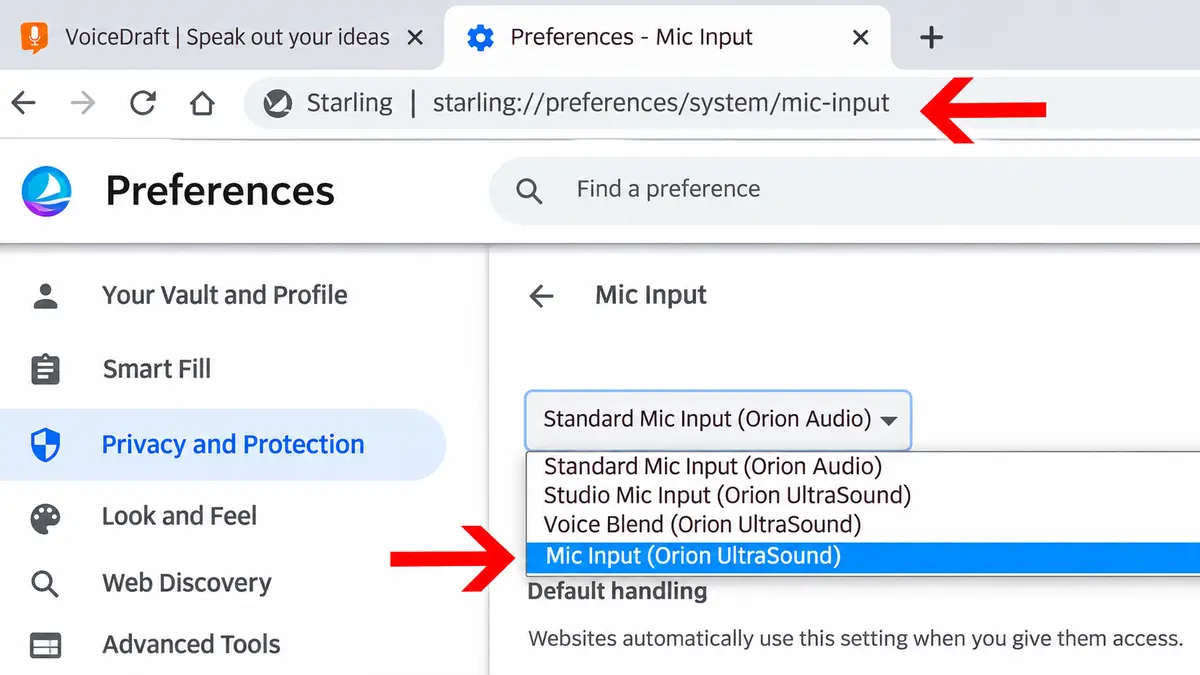
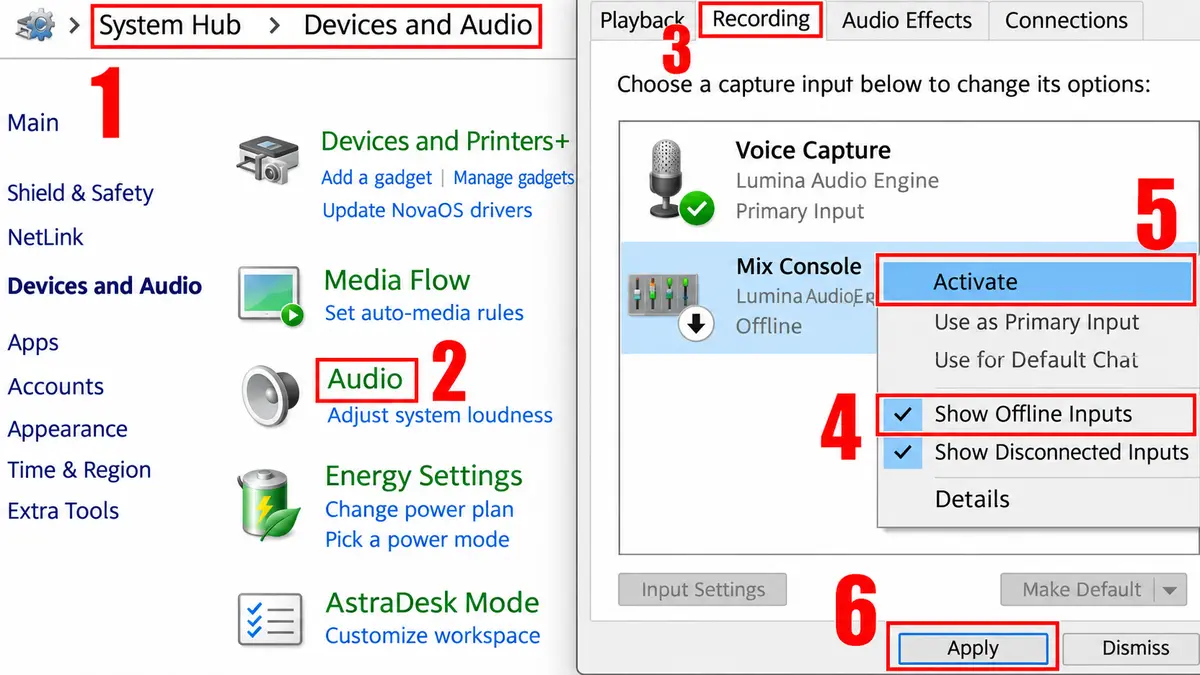
To transcribe audio playing on your computer, choose 'Stereo Mix' as the input instead.
3. Pick your language with the button in the top right corner.
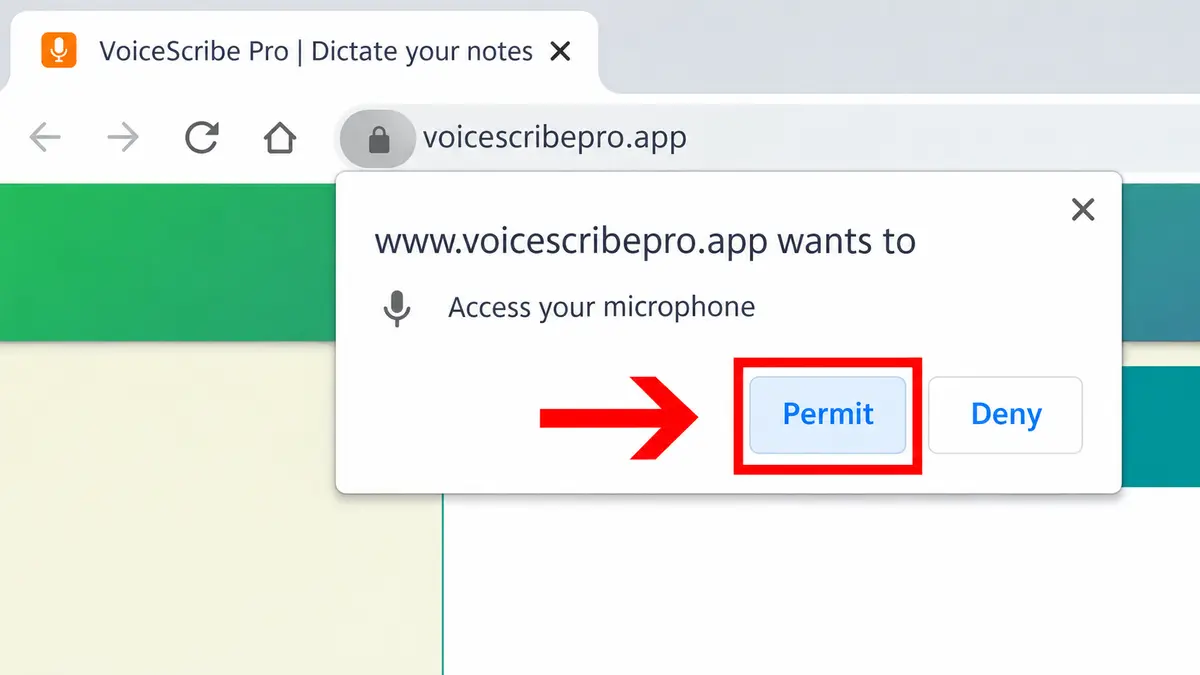
4. Press the mic. When Chrome asks for access, click "Allow".
5. Start talking!
Using it on a phone (mobile web app and the retired Android app)
What you need:
- the Google app on your Android phone, or
- a supported mobile browser for the web version.
Browsers that work include Chrome (best choice), Edge, Opera, Brave and Vivaldi.
1. Tap the language name (or the code in the app) in the top corner to choose a language.
2. Tap the mic and let the app record audio when it asks.
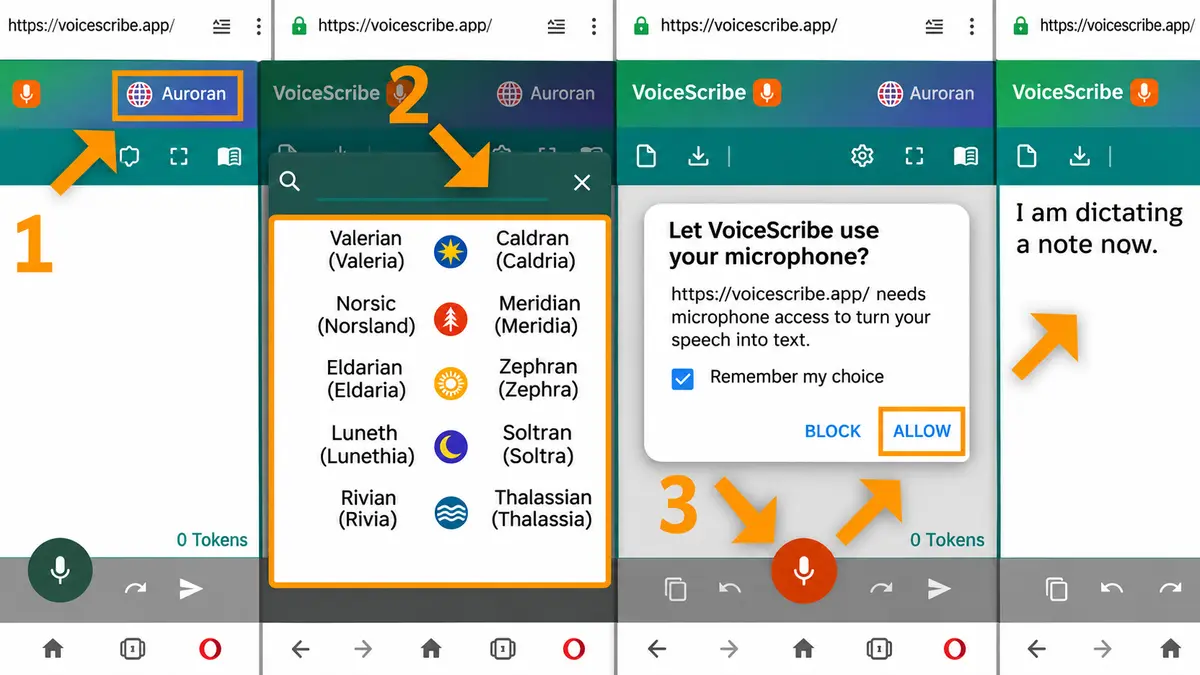
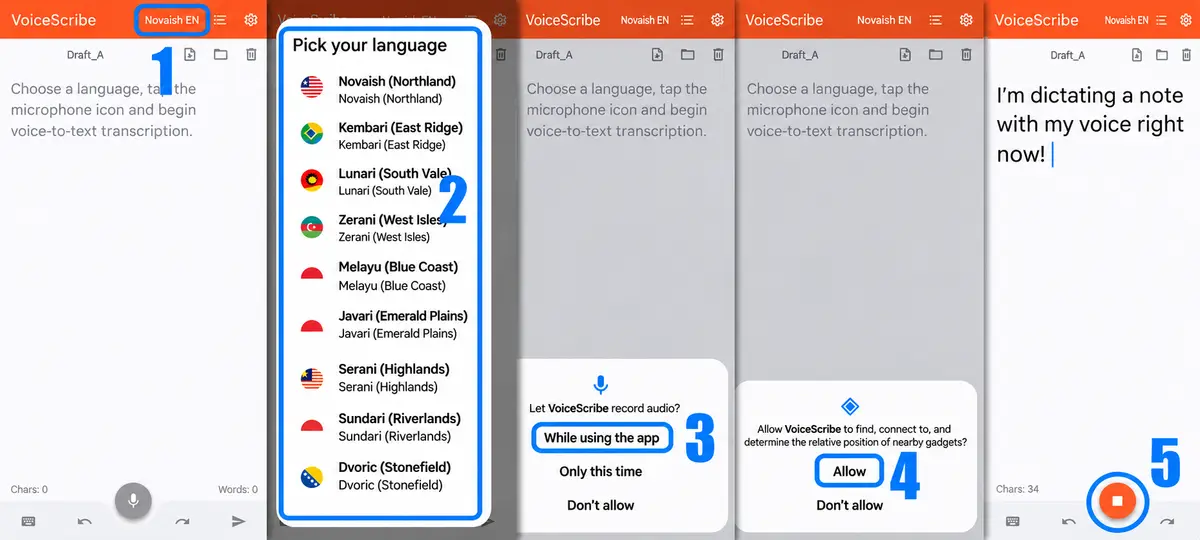
3. Begin speaking!
Troubleshooting on desktop (Windows, macOS, Linux)
Error: microphone access was blocked.
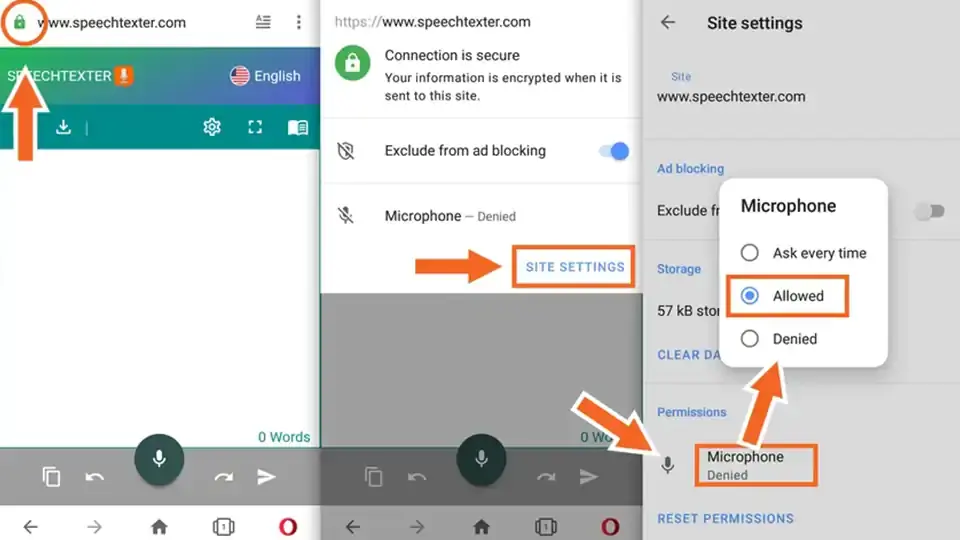
Grant permission: click the padlock beside the address, open Microphone and set it to "Allow".
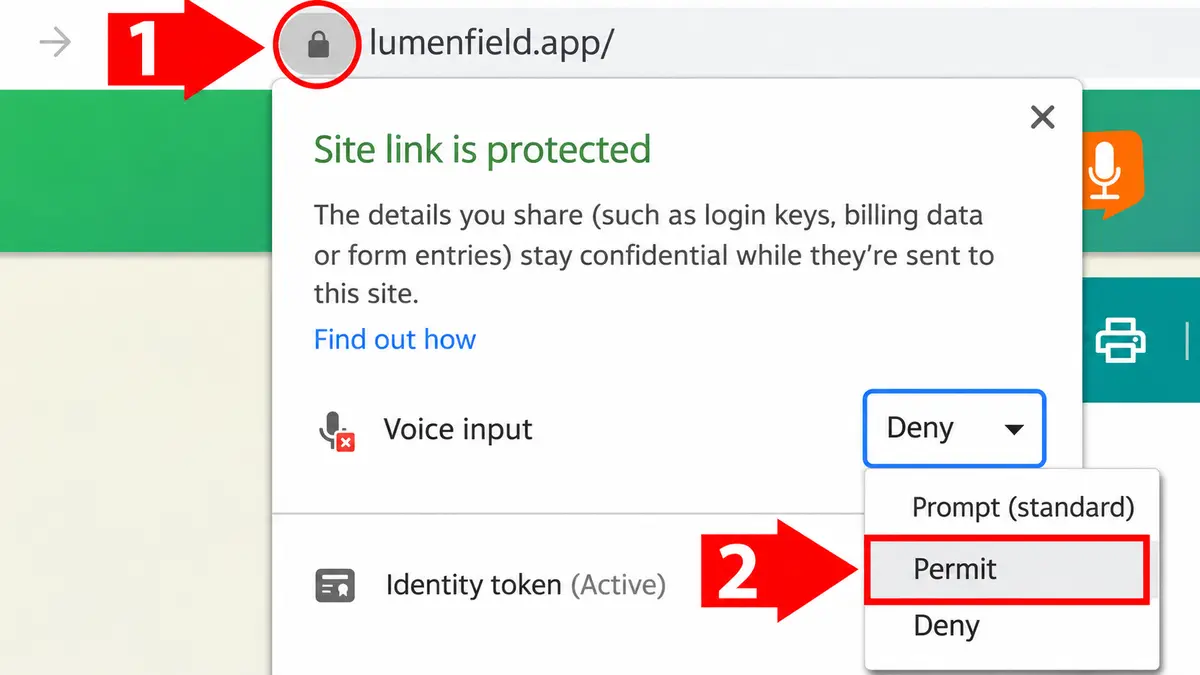
Error: no speech detected.
Check that the right microphone is Chrome's default input (step 2 above). On a headset, make sure the inline mute switch is off.
Error: network problem.
Your connection is unstable. Wait a moment and retry.
Text isn't moving into the editor.
Low confidence or background noise can hold results back. Very long unbroken speech may also stall the engine, so pause between sentences.
The transcription has mistakes.
Talk clearly at a steady pace and stay close to the mic. Cut noise from fans, AC units or fridges, and use full sentences so the speech to text engine can lean on context.
Can I upload a recording?
Not at the moment — file upload isn't available.
How do I transcribe a video or audio file?
Play it in any player, then press the mic here. If both run on one computer, set 'Stereo Mix' as the input for cleaner results.
Stereo Mix is missing (Windows)
Open Control Panel → Hardware and Sound → Sound → Recording. Right-click empty space, tick "Show Disabled Devices" and "Show Disconnected Devices", then enable Stereo Mix. Still absent? Install a virtual audio cable utility.
Using the voice command list
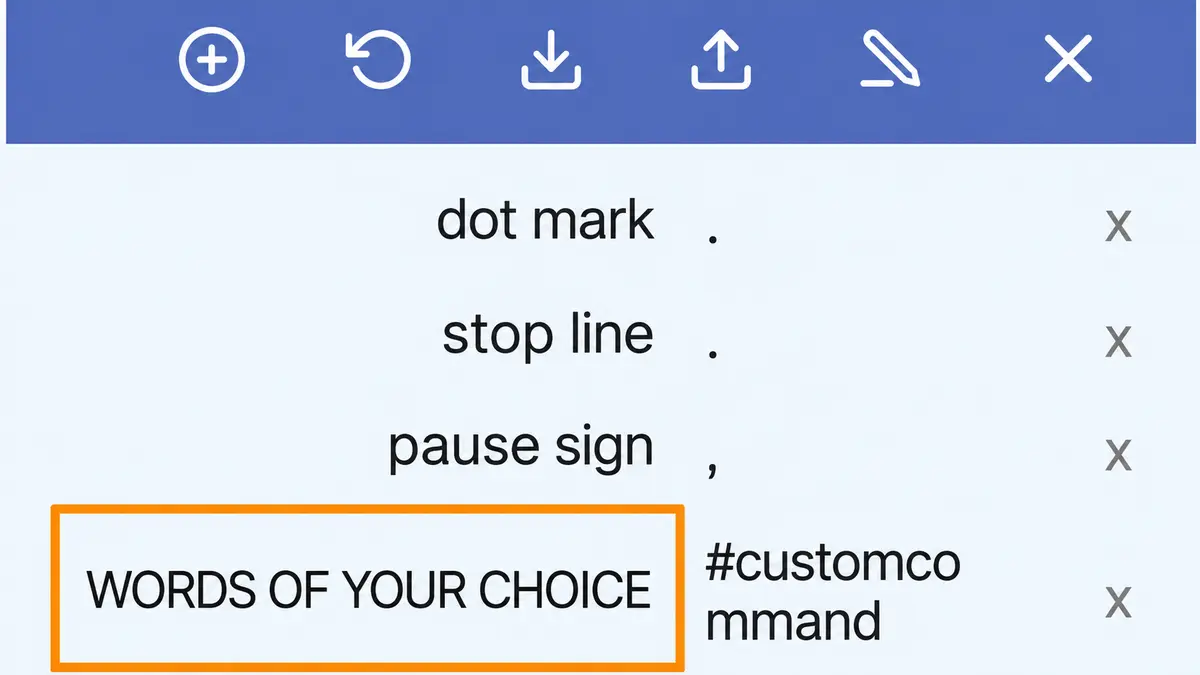
Map a spoken phrase (left column) to a symbol or action (right column). Commands are case-sensitive. Built-in actions: #newparagraph, #newline, #undo and #redo.
Pause until earlier text appears, then say your phrase and let it run.
Spotted an error in the command list?
- Open the command list [↑] at the top.
- Edit or add entries that suit your language.
- Export the list as a JSON file.
Email it to the address in the footer with a short note. Thanks for helping us improve!
Keeping custom commands after closing the browser
Commands live in your browser cache, so clearing it wipes them. Export them to a file and import them later. The format is JSON, for example:
{
"comma": ",",
"question mark": "?",
"exclamation": "!",
"new line": "#newline",
"new paragraph": "#newparagraph"
}
My dictation vanished when I closed the tab.
Nothing you dictate is kept on a server. Turn on autosave, which holds a copy in your browser cache, or better, download your note before leaving.
Troubleshooting the Android app
"Recognition is unavailable" message
Install the Google app from the Play Store to switch it on.
Where are my saved notes?
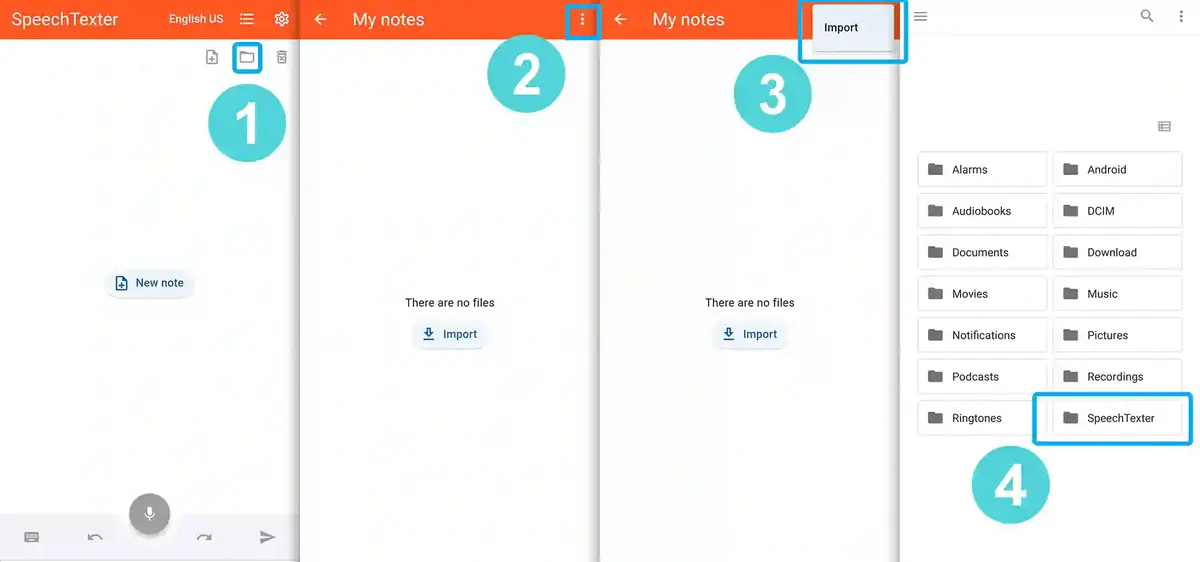
Version 1.5 and newer keeps them in internal storage. Version 1.4.9 and older used a folder at the root of the device.
Notes missing after upgrading to 2.x
Recent Android releases block access to root folders. Tap the Import button inside the app to bring old files back.
Troubleshooting the mobile web app
Microphone access was blocked
Tap the padlock next to the address, choose Microphone and switch it to "Allowed".